Math Teacher Interviews
Math Teacher and Kansas Teacher of the Year Nominee, Scott Keltner
Former New York Math Teacher and Co-Author of Teaching 2030, Jose Vilson
Illinois Middle School Math Teacher, Elizabeth Gates
South Carolina Math Teacher, Bridget Pearsall
Illinois Math Teacher, Elissa Miller
Learning Designer and Former Texas Math Teacher, Kathryn Laster
Former Louisiana Math Teacher & Assistant Principal, Cindy Wallace
Texas High School Math Teacher, Shireen D.
Former President of the Georgia Association of Mathematics Teacher Educators, Sharon Taylor
Math Professor at San Jose State University, Joanne Becker
Former President of the Colorado Council of Teachers of Mathematics, Catherine Martin
Math Teacher & Former President of the Associated Mathematics Teachers in Connecticut, Lorrie Quirk
Interview with Scott Keltner, Math Teacher and Kansas Teacher of the Year Nominee
Math teacher Scott Keltner set aside time from his hectic schedule to talk to us about his typical workday, the aspects of teaching that he enjoys the most, and his guidance for those new to the field. Scott, a ten-year high school teaching veteran, who was recently one of eight finalists nominated for Kansas Teacher of the Year, attended Cowley County Community College and Emporia State University, where he earned an associate’s degree in Applied Science, and a bachelor’s degree in Education, respectively. Scott currently teaches Algebra 2, Intermediate Algebra, College Algebra, Math Strategies and an ACT Preparation Course. In past years, he instructed Calculus and Statistics.
 Please describe your typical workday.
I have three daughters: ages five, seven, and twenty months. A majority of the time, the older two will ride to school with me and catch a shuttle bus to their school from the building where I teach. My mornings are often centered around guaranteeing they make their way to the bus on time, sometimes occupying them by allowing them to help make copies or straighten up desks from the previous day.
After returning from the bus stop, I try to ensure as much is prepared for my first class as possible, then position myself in the hallway as students make their way to classes to start the day. I have a copier just outside my classroom door (also available for student use as a network printer, this part of the hallway sees a lot of foot traffic in a typical day) and can start a copy job between classes as I trek back and forth to monitor hallways between class hours and welcome students as they make their way to my room. This also helps give me a little momentum in taking attendance each class period, as I’m able to see several of my students before they even arrive in class.
Lunch potential depends on the day, whether I have something to deliver to the office or my duties as club sponsor dictate that I take care of a small job instead of grabbing a bite to eat. If I get time and happen to be in the area of the cafeteria, I drop in and grab a cup of coffee and get a couple minutes chatting with the lunch ladies, which is always fun. My plan period is the hour directly after lunch, so it is a ‘plan B’ for taking time to get something to eat on most days, but can often go past unnoticed without getting a bite.
I don’t mention the specifics of any particular class period, because I try to have enough variety in class that it becomes difficult to generalize. That gives me incentive to do something different and creative with classes, almost leaving students wondering what will happen next.
If this particular day is a Tuesday or Thursday, my wife is working late and I’ll not only have our two oldest daughters present once they get off the bus after school, but also pick up our youngest from day care and try to make a trip to the public library if time permits before we need to head home and prepare dinner. I try and get a handle on scoring some papers after school while the older two girls are with me, but often end up just packing a night’s worth of materials to take home and attempt to complete that night after their bedtime.
This semester, I had some time off, but for the past three years, I have served two nights a week as an adjunct math instructor at the local community college, oftentimes teaching College Algebra, Statistics, or Intermediate Algebra and being able to modify lessons I have used in those same subjects with my high school classes to instruct at the college level. This opportunity arose when family time grew scarce while I was an assistant basketball coach, being gone or home late five, sometimes six nights a week. The adjunct instructor position allows me to teach two additional nights a week, and get an opportunity to gain insight into how higher education looks and functions, which has given me some great insight as I work with juniors and seniors who have questions about enrollment, course placement, admissions, and general college questions on a regular basis.
I try and choose clothes for the next school day, not just for my daughters but also myself as I iron my shirt and/or pants as necessary. A quick lesson I learned during a teacher observation opportunity I had in an Introduction to Education course I took in college related to professionalism: Set yourself apart from the students by the appearance you make. On my first day of being a student observer, I was asked if I was a new student and if I would be going out for basketball that year. That was enough for me to know that wearing dress pants and a dress shirt was not significant enough to distinguish me from students; so I started then, and continue now, to wear neckties a substantial amount of the school year, sometimes drawing scrutiny for dressing that way on designated casual dress days for staff in our building. On the other side of that, if students are asked by a coach or club sponsor to wear a necktie, they know exactly who to seek out if they need help in properly tying a necktie.
What is your philosophy of education?
“Have fun, while getting stuff done” is the mantra that governs my classes, focusing on creating a community of learning where all students are involved, engaged and have a role to play. This sense of community in learning extends beyond the classroom, beyond a teacher’s subject area of expertise, and most certainly beyond a single school building. The more collaborative the effort, the greater the impact on student learning across the board. Establishing a community of learning connects teachers within the same building, school district, and beyond. If all schools and students are held to the same standards, whether through No Child Left Behind or Common Core Standards, sharing the learning process should be vital to all teachers. Gone are the days of keeping a lesson plan to oneself or closely guarding an activity for use only in a single classroom. One of my strengths as a teacher is my regular use of technology in the classroom, which also encourages other teachers in my building to seek my advice in implementing technology in their own classes, be it constructing a lesson presentation using a new software program, connecting an interactive whiteboard or demonstrating the use of Google maps to take a virtual field trip off campus. Teachers always envision that ‘teachable moment’ with students, but I extend that belief towards helping my colleagues use new learning tools to help motivate students in their classrooms. As a math teacher, it is truly rewarding to hear students come to class and comment about the way their geography teacher delivered a lesson that day “using the thing Mr. Keltner showed her how to do” – rewarding to me because it expands upon the zeal for learning that I strive to instill in my classes.
Some mathematics teaching strategies rely on lists of steps or forcing students to memorize a particular mathematical definition. But when students are able to do something – create an experience that engrains a concept in their mind – they more fully understand the topic and how it relates to a real-world application. For example, we recently explored the topic of exponential growth by constructing a Sierpinski triangle out of pennies, demonstrating what happens when you begin with an initial value, and then tripling it over and over again. The abstract idea of exponential growth became much more concrete and visible to students who were working it out in real time, rather than reading it in a textbook or trying to theorize about what a bank account balance would do twenty years from now, without actually having the money as a reward at the end of the example. The positive feedback on this lesson from students, parents, and colleagues revealed that students did not simply go home that night and say their day at school was “fine.” They shared the lesson with their parents and their friends. A handful of students even posted photos of our activity online, tapping into the power of fast-moving social sharing sites.
I made a conscious decision some time ago to never say “I don’t know” and dismiss a student’s curiosity in class. As part of this goal, I reserve a space on my board for questions that students pose in class that I need to find a solution for. “How do you say pi (π ≈ 3.14) in sign language?” “Our new baseball bats had to meet some new regulation. What makes these new bats safer for pitchers?” “How does that timeline on iTunes know what fraction part of the song has played when the timer shows how much time has played and how long the song is?” These are great mathematically-minded questions that deserve a valid response, and, while I sometimes cannot come up with one on the spot, I focus on finding a solution to bring back to the students at a later time. When a student inquired why remainders are important, I asked the class to turn their textbooks to the back cover and inspect the bar code, also noting the ISBN that lies adjacent to it. Both of these systems rely heavily on remainders, which can often be dismissed as something students use for a test and then “never use it again.” I was able to show students how ISBNs are important to us, as well as the reasoning behind those coding strategies, such as identifying the language of the book, the book’s publisher, and why the last digit of the entire scheme is so reliant on remainders. A similar case was made for UPCs with a different algorithm dictating the structure of those codes. To hear students reflect on a time they went to a store and had an experience that used UPCs, either as a consumer or employee, and how they knew what was happening within the programming of the cash register, let me know that they made the connection of the lesson and realize the importance of what so many consider to be a trivial math concept.
My former students tell countless stories from class and frequently come by my classroom to visit when they are back in the area. It also comforts me to find that some of my former students are in college now with plans to become a math teacher themselves. I take an interest in what former students do once they leave the four walls of my classroom, writing letters of reference, or celebrating achievements, such as winning a scholarship, being accepted into nursing school or receiving their student teaching placement. Seeing what students are doing and planning to do allows me to reminisce on what they once did in my class, but also makes me look forward to what they will achieve as their next great milestone.
Students rarely call me out with the phrase “When are we going to use this in real life?” My lesson structure does not leave any doubt in their minds that I will find and demonstrate a real-world example of the concept we are using in class. By creating a community of learning within my classroom,
I look forward to sending my students away into the community, learning all the while.
What aspects of your job do you find most challenging, and how do you overcome them? What do you most enjoy about being a math teacher?
Being a math teacher, I think the most challenging part is finding applicable relations to the material that is relevant to my students. There are so many different personalities and backgrounds among our students, it is difficult to find a single context that fits (or intrigues and engages) them all. But, that also is one of the most enjoyable parts of my job and keeps me coming back for more, striving to make a lesson different and meaningful from one year to another. In all honesty, I had little to no interest in NASCAR when I began my student teaching experience, but noticed it was a passionate interest to many of the students I had in class at the time. In fact, it was an unending battle to try and get through a lesson on Monday unless I could converse about who won the race on Sunday. So, I began watching races, scanning for applications to what we would be covering in class recently or in the near future. Before long, I was chiming in on post-race analysis and even weaving it into the class discussions we were having in math class—even managing to get students ‘off-task’ from their NASCAR chatter and steered (yes, a NASCAR classroom pun!) towards the topic we were going to cover that day anyhow. This emphasized to me just how important it can be to establish rapport with students and make relevant, engaging class activities they enjoy.
Then, my second year of teaching, I had Chase Austin in class as a freshman who will soon be racing in the Indianapolis 500 (he and I also share the same birthday, and he still regularly comes by to visit my classroom when he is in the area, even autographing my SMART Board on one particular visit). It was easy for me to find relevance to his racing prowess in class, and also find numerous other real-world examples that the majority of students became readily engaged in.
The most challenging aspect — but also the most rewarding one—is finding a way for students to make connections between the material and their interests or even an experience they had. Making those connections can give students insight, knowledge, and respect for their interests that may not have been obvious to them, but now serves as a sort of ‘inside joke’ that involves a lesson we used in class.
Math can be a challenging subject for some learners. How do you make your lessons engaging and fun for students and also relevant to their lives?
Absolutely, math has had a tendency to challenge students for myself and teachers everywhere, but that is a huge motivator to try different approaches to ensure students not only learn, but retain the material. One approach which has engaged students is through shared experiences, such as the installation of a wind turbine on our campus, constructing a Sierpinski triangle in the school parking lot while benefitting a charitable cause, and other unique activities that have not only engaged students but also their parents, siblings, and out-of-town friends. When students graduate, they regularly return to my classroom to share experiences they have had in relation to lessons or experiences we had in class, many times bragging about how they understand a concept better than others in their college class, or how they recall an experience we shared that helped them succeed in class or gave them something to share with their college classmates. Even something as simple as “I knew where to find that command on my calculator” is a point of pride for former students to share with me.
What words of wisdom can you share with recent graduates who are preparing to start a teaching career?
Remember that teacher who went the extra mile to help you out? Be that teacher. As simple a request as that may seem, you have no clue yet how flattering it is to be the teacher on the other side of classroom experiences where you have helped a legacy live on. My teaching career began as a result of being a teacher’s aide in high school, where the teacher was absent for long stretches of time because of an illness her sister had. The substitute teacher grew weary of seeing me run around class and explain examples to little groups of students at a time and finally hinted that I should just present the example to the entire class at the board. So, as a junior in high school, I essentially became a math teacher.
What I really want to get across with that short story is to make sure to take advantage of every opportunity you are given. Find that experienced teacher in your building and soak up any advice he or she is willing to share, even if it is as simple as “Don’t use the same water fountain as the students do” like I was given as a first-year teacher. For the teacher who shared that with me, it was a more valuable guideline to his health than any flu vaccine could offer him.
Form an online, professional presence for yourself (keep in mind the expectations that accompany the ‘professional’ presence and don’t think that a “The views expressed are my own and not my employers” tagline in your Twitter profile is going to cover anything you say or post). Collaborate with other, veteran teachers and modify or borrow lessons you find to fit your classes and share your own successful lessons if you have the chance to share them. There is no need to reinvent the wheel or insist upon using your own wheel, so to speak. There are a vast number of great math teachers out there who are sharing and working with one another already, and I only see this community growing as the Common Core gains even more momentum nationwide.
Being a teacher is not an easy job, especially for a first year teacher. As you will most certainly soon discover, though, the career has rewards that are measured in peculiar ways: a personalized coffee mug, a tongue-in- cheek mention in a Student Council candidacy video, or a shout-out on Twitter.
If that isn’t encouragement enough, I’d like to paraphrase my old basketball coach in saying “they wouldn’t hassle you if they didn’t like you; it’s when they leave you alone and don’t say anything that you need to worry.”
We thank Scott for taking the time to share his heartfelt and candid advice with current and prospective teachers. You can connect with Scott on Twitter @ScottKeltner.
Read about how to become a teacher in Kansas.
Interview with Jose Vilson, Former New York Math Teacher and Co-Author of Teaching 2030
We interviewed Jose Vilson, an eighth grade math teacher in New York City at the time of this interview who co-authored the book Teaching 2030: What We Must Do For Our Students and Public Schools…Now and In The Future. Jose now works as an education consultant and speaker while pursuing his PhD in Sociology and Education at Teachers College, Columbia University. Jose previously attended Syracuse University and City College of New York, where he earned a bachelor’s degree in Computer Science and a master’s degree in Mathematics Education. During the interview, we discussed how Jose integrates technology into the classroom, the techniques he uses to make his course subject matter relevant to his students’ lives, and finally, his words of wisdom for those who are preparing for their first teaching jobs.
 Please describe what a typical day looks like for you.
A typical day consists of me getting to school 45 minutes to an hour before the 8 a.m. start time for school, getting my mind and papers ready for class for the day. I usually teach first period either as the only teacher for one of my eighth grade classes, or as the co-teacher for another one of my eighth-grade classes. During the day, I’m either meeting with students who are helping me to develop a student ambassadors program, or with other teachers around curriculum and pedagogy.
During my periods where I’m on my own, I’m either working on curriculum, working on our website, or monitoring our data management system on Google Docs. If I’m not in a classroom after lunch, I’m also finding time for Penny Harvest, one of our service learning projects at the school, then working on STEM projects with fellow math and science teachers.
How do you use technology as a tool for learning in your classroom?
I usually use technology in one of two ways: for grading students in my classroom or developing electronic teacher assessment notebooks for every teacher in the school. In the former, I use EnGrade, an application that lets me put my grades online so students and parents can see my grading in real time. It also keeps me organized by tracking attendance and other assessments. In the latter, I develop online spreadsheets via Google Docs / Drive so teachers can get a good sense of their students’ assessment information. In turn, they also have to enter their performance assessment grades so the teacher teams get a good sense of how students are learning in the class.
What aspects of your job are the most challenging?
The most challenging aspect of my job as math teacher and instructional coach is managing the different personalities and tasks I’ve been asked to perform.
What do you most enjoy about being a teacher?
The students are always the best part of being a teacher. Lots of people talk about small victories, but I like to think of them more as ‘sparks.’ When I see a student who normally doesn’t get it catch a spark of understanding, we try to hold onto it for dear life.
How do you create a successful home and work balance?
What’s balance? Seriously, I find that learning how to prioritize (along with shaving off a bit of sleep, unfortunately) plus having good time management skills and a sense of what really needs to get accomplished really helps me out. Plus, I dedicate certain periods in my day to certain activities. For instance, my blogging schedule gives me four days throughout the week for about an hour or so per piece.
Math can be a challenging subject for some learners. How do you make your lessons engaging, fun and also relevant to the lives of your students?
Making math engaging is all a matter of bringing as much clarity to the concepts and procedures as possible. Lots of that has to do with understanding what will bring students to the idea that, yes, they can get it wrong, but if they persist and keep trying, we can arrive at the correct solutions, no matter how many solutions there are.
What advice can you give to recent graduates who are preparing to start a teaching career?
Spend some time in the classroom. Learn some empathy. Get a nice watch. As the year progresses, start difficult, get easier if you must. Learn from other teachers, take what works for your personality, and apply it as early and often as possible. Good luck.
We thank Jose for taking the time to share his insightful comments and wish him all the best with the rest of the school year. You can view Jose’s TEDxNYED presentation on the topic of redefining teacher voice here, or connect with him on LinkedIn and via his website, The Jose Vilson.
Read about how to become a teacher in New York.
Interview with Elizabeth Gates, Illinois Middle School Math Teacher
We had the opportunity to interview Illinois seventh grade teacher Elizabeth Gates to get a better feel for what it’s like to be a math teacher. Elizabeth attended Miami University where she earned a BA in Middle Childhood Education, with endorsements in Math, Social Studies, and Reading. During our conversation, we talked about Elizabeth’s typical workday, how she balances personal and professional obligations, and her advice for recent graduates and new teachers.
 Can you please describe your average day at work, Elizabeth?
On a typical day I wake up at 6 AM and arrive to school around 7:50 AM. I offer office hours before school so students may come to my room at 8 AM for extra help. I report to the locker room at 8:20 AM to monitor students while they drop off their belongings and go to their first period class. I alternate advisory with another teacher, so some days I help seventh grade students with various subjects during a study hall-like period. If I do not have advisory I have an extra period for planning/preparation for the day. I teach block periods so my first class is periods two and three, which is approximately 80 minutes. During that time, my students are often working in groups and I walk around assessing, understanding through their conversations. Fourth period is a planning period that is often used for seventh grade team meetings, IEP meetings, or planning time with the other seventh grade teachers. I eat lunch during fifth period, which is a much-needed break to refuel and relax for thirty minutes with some colleagues. My next class is sixth and seventh period, with a high concentration of IEP students needing lots of time and attention. Eighth period is a planning time I use to prepare my lesson for the next day or meet with the special education teacher to discuss modifications for our curriculum. My last class is ninth and tenth period and it never fails to be my most difficult class every year – students’ brains are in overload by this time. After school I might have a meeting (staff or committee) or help with after-school homework programs. I leave school around 5 PM and head to my second job! I teach spin classes at night and finally get home around 8 PM I eat dinner, watch a little TV and go to bed around 10 PM Somewhere in my crazy schedule, I find time to grade student work, make copies, email, call parents, and organize my room. This is my crazy life five days a week!
What aspects of your job are the most challenging and how do you overcome them?
My biggest challenge is balancing my students’ needs with the pressure of my district’s pacing expectations. It is very difficult to find time to execute enriching lessons or conduct interventions when our curriculum often covers different topics each day. It is a constant internal battle I face when I know I want to do what is right for my students while also trying to meet the expectations of administration.
In spite of work challenges, what do you most enjoy about being a teacher?
I love that everyday is a new day with new experiences. I learn from my students and have the opportunity to constantly grow as a professional.
How do you create a successful home and work balance?
Although I don’t believe my life is balanced, I took on teaching spin classes as a way to structure ‘me time’ into my day. I love cranking up the music and encouraging my clients to be the best they can be for 45 minutes! It is very refreshing to have adult conversations and it’s nice to burn off a little steam while on the bike.
Math can be challenging for some students. How do you make your lessons engaging and fun for them, while also relevant to their lives?
To keep students engaged, I stay away from teacher-centered lectures. Students are presented with sets of problems and share different solutions and strategies used for the problem. Because the problems are difficult, I always praise the students for the thought-process they’ve gone through, rather than just praise them for generating the correct answers. I often tell my students “I don’t care if you are wrong as long as you are thinking.” I have found students are more open to attempt problems when they know they are accountable for something other than a correct answer.
What advice can you give to those who are new to the field of teaching?
The pressure you encounter from administration can be intimidating and challenging. Don’t worry about being the perfect teacher – worry about your growth as a teacher. I have become the most successful when I have picked small things to change (group work, rubrics, assessments) and only focus on one thing at a time. Find a community of teachers to help keep you inspired. Blogs, book clubs and professional development are some of my favorites!
We thank Elizabeth for taking the time to participate, and wish her all the best with the rest of this school year. Visit Elizabeth’s LinkedIn to learn more about her.
Read about how to become a teacher in Illinois.
Interview with Bridget Pearsall, Former South Carolina Math Teacher
We had the chance to interview teacher Bridget Pearsall, who at the time of the interview taught fifth-grade math as well as other subjects. Bridget earned a bachelor’s degree in elementary education at Auburn University. Based upon fluctuating class sizes and her district’s changing needs, she has taught several subjects in addition to math, including vocabulary and science. During our conversation, Bridget described an average day in her classroom, the ways in which she incorporates technology into her lesson plans, and her advice for recent graduates who are preparing for their first year of teaching.
 What is a typical day like for you?
I love to arrive to school super early so that I can get myself ready for the day before many others are in the building. I believe in welcoming my students as they enter my room. We are a leadership school, and part of the leadership program (which is based upon Stephen Covey’s Leader In Me program and The 7 Habits of Highly Effective People) is to ‘greet’ your children in the morning. I have a student who is the ‘greeter’ and this student shakes the hands of classmates as they enter the room. I always say ‘good morning’ and ask how the students’ evenings were the night before. The students are learning to be independent when they are in fifth grade – a skill that is needed once they enter middle school. I display morning work on the Smart Board, and we have ‘Silent Mornings’ so that we can all get our work done and relax before the day begins. This is a nice time of the day.
I teach math to three classes of 30 students. The team of fifth-grade teachers I work with have collaborated to divide the students up into their three classes based on the type of learner they are, and at what pace they seem to work best. This helps us better reach the students because we know what kinds of teaching styles that certain students need in order to be successful. I keep this in mind as our classes switch throughout the day. We do a lot of Smart Board activities in math, because there are so many math games available online. Every teacher should take advantage of these because it really motivates the students, and they can go home and use them as well. I also love making math more ‘visual’ and less ‘mental’ because students at the ages of ten and eleven seem to grasp concepts more quickly when made visual and applied in context.
Throughout the day, we listen to music in my class. I have a lot of children’s movie soundtracks, and other great songs that have ‘upbeat’ tunes. The class earns this privilege by participating and working hard in class. I play music when students enter my room so that they can settle in, write in their agendas, and get their desks ready for learning. We also listen while we do our independent work, stations, and finally before we leave, putting everyone in a good mood! I have also noticed that music cuts down on the chatting that may take place during transition times in class. We end our school day with ‘Special Area’ and recess, so we like to use our last ten minutes after Special Area to talk about what we are going to do after school, or what we are excited about for the coming week. I love these blocks of time because they help me get to know my students during a time period other than math class.
How do you use technology as a tool for learning in your classroom?
I incorporate technology into the classroom on a daily basis. I am obsessed with my Smart Board because it allows us to do many math games from online websites. I also use computers as one of my centers/stations during class time. For this, I will set up a game on the classroom computers, and students will rotate to the computers during our stations to complete the math activities. They are not always games, but sometimes they are learning tools that have the students answering multiple-choice questions. I find that multiple-choice computer activities are wonderful test practice because students can use their test-taking strategies to answer the questions. Technology, in general, can open up a whole new world.
What aspects of your job are the most challenging?
Students enter fifth grade with such different math abilities, making it challenging to teach them. There is always a slight struggle each day when I am trying to teach something to students who have not yet developed the basic skills. I often have to take a step back, break students into small groups, and attack those basic skills. This is challenging because it gives teachers that feeling that we cannot be everywhere at once. I wish I had four of me in the classroom on some days! However, when those students who struggle start to ‘get it,’ it is the best feeling a teacher could ever have! Of course, there are also students whose abilities are well above the fifth grade level and it is hard to keep challenging them. I actually have some of my students doing eighth and ninth grade algebra. They are like sponges and absorb any information I bring to them. They work so hard!
What do you most enjoy about being a teacher?
Everything! I enjoy the struggles, the hardships, the students, the laughs, the dancing (yes, we dance), and the learning. Each day is very different than the day before, and the students keep me on my toes. Teaching allows you to work with an amazing group of kids, while also challenging you as an adult.
Each day I learn something new, be it from my students, from other teachers, and even my own mistakes. Fifth graders are amazing and it is wonderful watching them grow. They are witty and coming into their own. They are learning how to be sarcastic and express themselves. I enjoy watching them figure out who they are, who they want to be, and who they decide to hang out with. In teaching leadership at our school, they also learn a lot about how to make good choices and plan for their future. The Seven Habits have been a great addition to my classroom.
Math can be a challenging subject for some learners. How do you make your lessons engaging and fun for students and also relevant to their lives?
Math is definitely challenging for some learners! But, then again, English was always really challenging for me. I try to imagine myself before I knew the concept I am about teach. I think, “How was I taught this material? Do I remember anything fun I did when I learned this concept? When do I use this skill in my life?” If I can find answers to those questions, then I can usually think of a game or activity that we can do in order to make this concept relevant to their lives. It is very difficult to make every single lesson relevant and engaging. There are certainly some days when we create a foldable of vocabulary words or math sample problems. I don’t particularly love those days, but sometimes you just have to teach students the skill in order to play a game or complete an activity. As I mentioned earlier, Smart Board games are huge thrillers in my classroom, especially the games that have time limits. They are so much fun and I even find myself getting excited about them! I also do a lot of activities where students get to cut, sort, and glue different ideas or concepts. This allows them to think about the idea enough to know where to sort it. We do memory games or variations of ‘Go Fish.’ Most everything that I do in my classroom is teacher-made and I create new activities each year. I find that the students are so different from year to year that what might have worked last year, may not work this one. If I can figure out how I use a certain skill or concept in my life, I always share it with the class. They love to hear ‘why’ they are learning what they are learning. It is great to see them make those connections, or tell me about how they used their math skills while they were at home over the weekend.
Additionally, I do a lot of ‘small grouping’ with my students. I call them back to the back table and we discuss what we are learning or work on small dry-erase boards to practice a skill. I enjoy getting to meet with a smaller group of students because it is relaxing and more engaging. My small groups are much different than most classrooms. I don’t have groups that stay the same each day. My small group table is like a revolving door. I call a few kids back to the table and when kids demonstrate that they understand a skill, they return to their seats so that they can play a game or complete an activity. If students find a new concept difficult, they stay at the table with me. I like this because no one else really notices when a certain student has been at the table longer than others, since they are all getting up and down during the class time. I hold their attention for the short time they are with me, and I don’t burn them out. It’s rewarding to be there when they start to make connections and gain confidence.
What advice can you give to recent graduates who are preparing to start a teaching career?
Here’s what I wish someone had told me before I started my first year: make sure you are enjoying what you are teaching, otherwise, the students will not enjoy it either! I try to plan activities that I also like participating in, because students can sense when a teacher enjoys something they are doing. They then feed off that excitement. Sometimes my students say to me, “Mrs. Pearsall, you must really like math!” I find that comment great because it means that my love and appreciation for the subject shows when I teach it. I will also add one more thing. Don’t assume that you will always have those perfectly scripted lesson plans all of the time. Sometimes things come up and lessons do not go as planned. While student teaching, everything I did always went so well! Then I had my own room and I realized why they say teachers need to be flexible with their schedules and lesson plans. Finally, you are going to love your job! The choice to become a teacher is the best one I have made in my life. I am very lucky to be teaching what I love to students that I love.
We thank Bridget for taking the time to talk with us!
Read about how to become a teacher in South Carolina.
Interview with Elissa Miller, Illinois Math Teacher
We interviewed Elissa Miller, a high school math teacher who teaches Algebra I & 2, Geometry, ACT Prep and RTL Math. Elissa attended Southeast Missouri State University, where she earned a BS in Mathematics Secondary Education. During our interview, Elissa described an average day in the classroom, and she also explained how she makes math fun and relevant to her students’ lives. Finally, she shared her advice for those new to the field of teaching.
 What is an average workday like for you?
A typical day for me starts at 6:20 AM. I get to school by 7:40 AM and start making copies, setting up the computer, and making sure the room and materials are ready to go. Class starts at 8:00 AM I’m on my feet teaching or walking around the room to monitor student work nonstop until 9:40 AM, which is my planning period. I straighten up the room, finish making copies, take care of miscellaneous things in the office, check my mailbox, go to the bathroom, and get things organized for the next class. There is also the possibility that my plan period will be dedicated to subbing for another teacher or attending a meeting. I then teach again from 10:33 AM to 12:09 AM which is the start of my 31 minute lunch (which is the longest lunch we’ve ever had) but I have to get back to the classroom in time to set things up for the next period. From 12:43 to 3:10 PM, I teach again nonstop. Whew, then school is over! I straighten up the room just in time for tutoring, after-school meetings, or graduate class. I get home between 5:00 and 5:30 PM, take a nap for about an hour, get up, eat dinner and take a bath. I do random things around the house and actually start grading/planning/creating things for the next day around 9:00-9:30 PM and usually quit around 1:00 AM. I finally go to sleep and start over the next day at 6:20. I repeat this schedule five days a week.
What recommendations do you have for teachers aspiring to be ‘lifelong learners’?
Definitely get involved with blogging and Twitter – they are similar to an online faculty lounge but with all the best teachers. With them, you will never be without ideas or people to brainstorm. They are my number one support group and the reason that I am a good teacher at all. I have high-quality professional development 24/7. We share resources, ideas, stories, encouragement, and our lives. Other than that, reading is my number one source of learning. Anything you want to learn is inside a book or page, waiting for you to discover it.
What aspects of your job present the most challenges?
Time is the biggest challenge. Our greatest work is done behind the scenes, but the school day and our salary is based around when we are ‘performing’. It’s challenging to create high quality lessons that engage students and give students opportunities to learn, but it is even more challenging to do that on a daily basis. The job is never done. It’s challenging to focus all your time on creating lessons when you have a million other things to do as well: paperwork, grading, RTL, tutoring, extracurricular activities, parent/teacher conferences, re-teaching students who were absent, dealing with discipline issues, preparing/buying supplies, etc. It’s a challenge to balance between giving 100% and giving so much that you burn out and give up. It’s a challenge to know what to say to make an impact on a student without scarring them for life. It’s a challenge to know what to do next in a job that doesn’t come with a manual. In addition to all that, we have to defend ourselves at every turn because of the way the media and government devalue our worth.
Why do you enjoy being a teacher?
I make things happen. I overcome obstacles. I design. I organize. I write. I reflect. I analyze. I problem solve. I am a math teacher. I enjoy teaching because I love solving puzzles. Creating opportunities for students to learn and solve puzzles on their own is my life puzzle. I enjoy making things better and I believe that education is always a mode of bettering yourself. I get to teach students how to learn and uncover the way their mind works. I get to empower people. I get to spend hours and hours with the most interesting people and then watch them take on their own life puzzles.
Math can be a challenging subject for some learners. How do you make your lessons engaging and fun for students and also relevant to their lives?
To engage students, I’m currently using a lot of card sorts, review games, and foldables. Card sorts are a way for students to identify similarities and differences and then categorize them, which are all higher-order thinking skills. Review games are a way to increase motivation, discussion, and error analysis among students while bringing in an element of fun and surprise to practicing problems. Foldables are a way for students to visually organize information and take a break from notes or lecture, allowing them to stop and process their learning. Anything that disrupts students’ expectations of what math class usually looks like is a way to increase engagement and motivation. I struggle with making math concepts relevant to their lives but I hope that the underlying skills are what will stick with them: finding errors and fixing them, perseverance, problem solving, working together, thinking outside the box, using discussion to help others understand, asking and answering good questions, organizing information, identifying patterns, describing, labeling, making predictions, teaching others, and taking responsibility for their own learning and their own lives.
What words of wisdom can you share with recent graduates who are preparing to start a teaching career?
Beg, borrow, and steal every resource you can find. Make time to sleep. Over prepare for every lesson, every time. Fill every single instructional minute. Be flexible and choose your battles. Do everything you can to make your students question, wonder, and think. Stay organized to help keep your sanity. Make students do the work. Be less talkative. Ask good questions. Be as consistent as you can. Find your support system. Use Twitter and blogging to reflect and be part of a 24/7 professional-development community. Make time to do things you like and to do nothing at all. Don’t let grading take over your life. Don’t reinvent the wheel; instead, modify the wheel to make it roll better. Read, read, read. Laugh with your students and laugh often. Ask students for feedback. If something doesn’t work, stop doing it. Keep trying new things.
Sometimes, you will cry. It will be okay. Every day is a chance to start over again so make the most of tomorrow. Let the bad experiences be a lesson on how to be better. Then go and be better.
We sincerely thank Elissa for setting aside the time to share her straightforward and invaluable advice. Visit her blog, MissCalcul8 for more teaching inspiration, or connect with her on Twitter @misscalcul8.
Read about how to become a teacher in Illinois
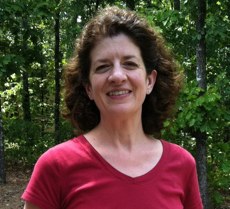
Interview with Kathryn Laster, Learning Designer and Former Texas Math Teacher
We spoke with Kathryn Laster, who at the time of this interview was a Pre-AP and Pre-Calculus teacher for eleventh and twelfth graders and a Campus Instructional Specialist. She has since founded Refined Learning Design, a professional community for learning designers and educators. In past years, Kathryn taught everything from eighth grade Math to Calculus. Kathryn began her studies at Texas Christian University, where she earned a Bachelor of Science in Secondary Education. She later earned a Master of Science in Mathematics Teaching at Stephen F. Austin University. During our interview, the 23-year teaching veteran discussed her typical workday, why she enjoys being a teacher, and how she makes the subject of math both fun for her students and relevant to their lives.
 Please describe what a typical day looks like for you.
My days never look the same, and I love all of the variety. Our school is on a seven-period day and our first class begins at 9:00 in the morning and I finish around 5:00 in the evening. I arrive early to have enough quiet time to get work done in the morning. I teach two class periods, tutor before school and during the day, and I attend multiple common planning meetings with teachers in several content areas. I work with new teachers and our Instructional Leadership Team, so I observe classrooms, plan presentations for meetings, and attend meetings. Twice a week after school, I sponsor a tutoring club for our international/ESL students. We practice English and I facilitate peer tutoring.
What recommendations do you have for teachers aspiring to be ‘lifelong learners?’
It’s important to find ways to keep learning long after you’ve finished your degree(s). Join professional organizations and sign up for their email newsletters. Attend as much professional development as you can, whether it’s offered by a national organization, your regional service center, your school, or a group of interested teachers. Find people to follow on Twitter, comment on blogs, get recommendations about other resources, and participate in Twitter chats to develop your Personal Learning Network. You can continue to learn and grow 24/7!
What aspects of your job present the most challenges?
High stakes testing presents the biggest challenges (and frustrations) for our teachers. We fight to find the balance between covering each objective mandated (at rigorous levels) and making certain students understand and retain concepts taught. At our school, we have a large number of English Language Learners, so imagine trying to describe Algebra 1 concepts (negative infinity, for example) to Burmese refugee students who have never even held a calculator, and then expect them to be prepared for the end-of-course test.
Why do you enjoy being a teacher?
I think teaching must be the most rewarding profession possible. To hear comments such as, “I finally understand math now!” or “I loved today’s lesson!” can make your day (or week!) When an ESL student who couldn’t answer the question, “What is your name?” now says, “Good morning, Ms. Laster!” you are a very happy teacher.
I especially love teaching high school students because I often hear about their accomplishments after their graduation. (Four of my former students are now actually my colleagues, and several other former students teach in our school district!) I love seeing students’ growth and progress, whether it is a deeper understanding of math or being a better leader and citizen.
Math can be a challenging subject for some learners. How do you make your lessons engaging and fun for students, while also relevant to their lives?
The three R’s of education are now relationships, relevance, and rigor, and I think building relationships is the most important of the three. (“They don’t care how much you know until they know how much you care!”) For that reason, I like to attend school sporting events, fine arts programs, or sponsor club activities. When students are struggling in math, I want to see them experience successes outside of the classroom. I seek out students at their jobs, performances, and even in the halls to make those connections! If you show you care in even the tiniest ways, students will work harder for you and be more willing to persevere during difficult times.
The simplest way to ‘hook’ students is by using their names, hobbies, and teams in our problems and discussions. For example, as Justin kicks the soccer ball, or as Adam throws a football pass, the path of the ball is a quadratic. We just studied sinusoidal models, and it was at the same time as our huge State Fair, so I used the actual dimensions of our ‘Texas Star’ Ferris wheel to create a problem.
To make lessons more engaging, I love trying new technology. Our school has a bring your own device (BYOD) program, so using different web tools and apps has certainly impacted the engagement level of my classes.
What words of wisdom can you share with recent graduates who are preparing to begin a teaching career?
As soon as you begin preparing for your teaching career, find support wherever you can, whether it is with co-workers or with your online personal learning network (PLN). Ask for help, accept suggestions, visit as many classrooms as possible, and work to find your teaching ‘voice.’ Teaching is an incredibly rewarding career, but you will certainly face struggles. However, there is always someone around who has been there and who understands what your job requires. You will soon be making the difference in the life of a child!
We thank Kathryn for taking the time to reflect upon her extensive teaching experiences and share her words of wisdom. Connect with Kathryn on LinkedIn and Twitter @kklaster, or via her blog, No Limits on Learning!
Read about how to become a teacher in Texas.
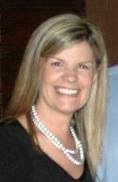
Interview with Cindy Wallace, Former Louisiana Math Teacher & Assistant Principal
We had the opportunity to interview Cindy Wallace, who at the time of our interview worked as a College Algebra and Trigonometry (Dual Enrollment Math) teacher for eleventh and twelfth graders and an assistant principal. She is now a test prep strategist, working with partner schools to help improve students’ standardized test scores. In past years, Cindy, a 13-year teaching veteran, taught all high school math courses, including Algebra I & II, and Geometry. Cindy earned a Bachelor of Science in Engineering and a Master of Science in Curriculum and Instruction at Louisiana Tech University. During our interview, we discussed Cindy’s recommendations for professional development, how she engages students in her math lessons, and finally, her words of wisdom for teachers new to the profession.
 Please describe your typical workday.
For the past six years, I have served my school in a dual role as an assistant principal and teacher, so my days are not quite the same as when I was in the classroom full-time. I teach only one block per day, but not until mid-morning. As a result, I spend the first 90 minutes checking to make sure substitute teachers have everything they need to be successful, walking through campus, working with teachers on curriculum matters, and prepping for my one math class.
Teaching is a very important part of my life. I have wanted to be a teacher for as far back as I can remember, which is partly why I chose to stay in the classroom after changing roles at my school. When I teach, I am with two groups of students from schools that are actually 250 miles apart. The 37 students are taught simultaneously, in both a face-to-face setting and via compressed video. It seems as though the distance would be a challenge, but technology makes it easy for learning to occur anytime and anywhere. The last half of my day is spent planning and providing professional development, writing grants, overseeing a Title I program and planning for the next day’s class.
What recommendations do you have for teachers aspiring to be ‘lifelong learners?’
Teachers aspiring to be lifelong learners should stay connected via blogs, Twitter, webinars, and conferences. I have found all to be an invaluable part of my professional growth. There are so many educators sharing through quality blogs and Twitter each day and it is easy to find a great webinar or Twitter chat each week. Conferences are a must! They are a great place to be re-energized and gather a wealth of ideas. Through the many resources, one can learn more than ever imagined and continue to stretch and grow professionally.
What aspects of your job present the most challenges?
As a math teacher, one of the biggest challenges is having the same academic goals for students with varied mathematical backgrounds. My curriculum is dictated by a local university. I teach the course; the professor sends the tests. Students must get up to speed quickly in order to be successful on the assessments administered every six weeks. For some, it takes more work outside of class to fill in gaps. I make myself available to sit with them, answer questions, and just watch them work to identify misconceptions. I support their outside efforts by posting videos on our class website, some of which I have made and others that were created by students. The extra effort always seems to help.
Why do you enjoy being a teacher?
I enjoy being a teacher, because I absolutely love my students. There is never a day that I leave the classroom without a smile on my face. It is so much fun helping students unlock their full potential. I find that their youthful exuberance as we try new activities and master concepts is infectious. It brings me great joy to know that I am doing what I was called to do.
Math can be a challenging subject for some learners. How do you make your class engaging and fun for students and also relevant to their lives?
I follow Madeline Hunter’s model for effective lesson planning everyday, and while the lesson flow is the same, the activities I choose are varied. Since my students are on two campuses, we use a lot of technology, even for things that would normally be done on paper. I have found that by nature, integrating technology keeps the class fresh, because there are just so many tools available to engage, enrich, and inspire students. One day, I may assess student learning with Socrative’s Space Race and the next day, students might use their cellphones to create Silent Math movie tutorials. For my students who need to move around a bit, I build in kinesthetic activities such as modeling of mathematical concepts with Play-Doh, creating human graphs or getting up and out of the chairs for a quick game of Splat. Regardless of the topic being covered, I always try to make the lessons real and relevant by tying the concepts to things that are important to them through the use of news articles or video clips.
What words of wisdom can you share with recent graduates who are preparing to start a teaching career?
Know that you are entering a profession that allows you to truly impact lives everyday. You have a tremendous opportunity to cultivate not only the talent that is obvious to others, but also the hidden potential within each student.
We thank Cindy for sharing her words of wisdom and wish her all the best with the rest of this school year. Connect with Cindy on LinkedIn and Twitter @_CindyWallace_.
Read about how to become a teacher in Louisiana.
Interview with Shireen D., Texas High School Math Teacher
We had the great opportunity to interview Shireen D., an Advanced Placement (AP) Calculus AB, AP Computer Science, Pre-Calculus, Geometry and Digital Electronics teacher in grades nine through twelve. She earned a Bachelor of Arts (BA) in Math, a Master of Science (MS) in Applied Math, and a Doctorate in Computational and Applied Math. Shireen worked in the field for two years before she earned an alternate route teaching certification. She is a 16-year veteran of the classroom, having previously taught a wide array of courses: eighth-grade Geometry, Algebra 1&2, Pre-Calculus, AP Calculus AB, AP Calculus BC, Computer Programming, Introduction to Engineering Design and Digital Electronics.
 Please describe what a typical day looks like for you.
I get up pretty early (5:00 AM) to exercise, otherwise I would not do it. I’m a morning person, so this is fine for me. I leave for work about 6:30 AM I prep for the school day and tutor kids sometimes until the start of school (around 9 AM). Then, I’m teaching, prepping, eating on the run or tutoring until 6:00 PM or so. Then I go home.
How do you create a healthy home and work balance?
I make sure to check in with myself, and if I’m feeling stressed, I make sure to check out early-ish and go do something fun: bookstore or frozen yogurt or a walk in the park. I do yoga as often as I can. I don’t have children, so that helps in the guilt-from-too-much-work area.
What aspects of your job are the most challenging?
Feeling that I’m doing a good job most of the time. It’s also challenging to change things up and try to find the perfect balance of reaching all or most of the kids all or most of the time.
What do you most enjoy about being a teacher?
I love the ‘puzzle aspect’ of creating new ways of teaching things that are fun, useful, effective, engaging, challenging and relevant. I also love the contact with the variety of students, people and personality types I see every day.
Math can be a challenging subject for some learners. How do you make your lessons engaging and fun for students, while also relevant to their lives?
I discuss cool ways in which the topics and concepts are used in the world. The kids may not necessarily use it later in life, but I think it’s fascinating how many different types of math can be used for all sorts of applications that are current. There are always stories in the news or curious ways and things you can come up with that use what you are learning. I also mention that doing hard things in general is great for your ‘brain muscles’. You don’t get smarter unless you do things that are hard and challenging for you.
What advice can you give to recent graduates who are preparing to start a teaching career?
Surround yourself with positive people. Keep learning, improving and striving for better. Make sure you take time for yourself and don’t burn out.
We sincerely thank Shireen for her educative advice, and send our best wishes for a successful school year. You can find more insightful mathematics material on Shireen’s blog, Math Teacher Mambo.
Read about how to become a teacher in Texas.
Interview with Sharon Taylor, Former President of the Georgia Association of Mathematics Teacher Educators
We had the opportunity to interview Sharon Taylor, former President of the Georgia Association of Mathematics Teacher Educators (GAMTE) and Professor and, at the time of the interview, Interim Chair of the Department of Mathematical Sciences at Georgia Southern University. She gave us excellent insights to share into what it’s like to teach mathematics and how to keep your higher-level skills sharp.
 Can you share with us what led you to pursue a career in teaching?
I have always wanted to teach. When I was in elementary school, I would come home and “play school.” It is the only profession I ever considered.
You received the Georgia Southern University 2008 Award for Excellence in Contributions to Instruction, a major achievement. What were some of the contributions for which you were recognized?
The award is given not just for “teaching” but for the overall process. So some of the things taken into consideration were developing curriculum for new courses, providing review sessions for our state certification exam, working with the state Department of Education to write materials for teachers, and attending professional development workshops to enhance my teaching.
What is the biggest challenge in teaching mathematics, and how do you overcome that?
The challenges are different depending on the students I am teaching. If it is a freshman level course like College Algebra, the challenge is having students who are not motivated or interested in math. I try to meet this challenge by making the class as interactive as possible. We do a lot of group work activities and I try to make students answer questions. It helps that I get to know all the students by name and can call on them to answer questions.
When I teach students who are elementary education majors, the challenge is that many of these students do not like math or have not been successful at it. I try to meet this head on by challenging them to get rid of that mindset. I try to instill in them that if they do not change their way of thinking, they will produce another generation of students who leave elementary schools with a dislike for math. This realization usually jolts them into at least trying to develop a better attitude. I also use a lot of group work in these classes as well. I also try to have fun while teaching so they can see that teaching math can be fun.
What are one or two effective ways you have seen technology implemented to further students’ understanding of math concepts?
The use of the graphing calculator has been one of the most important. It allows students to see graphs quickly and also lets them relate a table of values and the symbolic notation to the graphical representation. This is an amazing tool for many students.
How should beginning teachers of less challenging math courses stay current with their skills?
The easiest way is by attending conferences and attending sessions at a level higher than they are teaching. This is a real challenge. Most of the time when I go to a conference, I want to go see the sessions that will most benefit my students and my classroom. Sometimes it is hard to make myself go to something that I know will be interesting, but not directly applicable to my classroom. I rationalize my choice by saying I should stay current in case I ever do end up teaching that material.
Do you have any advice for students who are preparing to begin their teaching careers?
Be prepared for anything. While my best friend was getting her degree, she swore she would never need geometry because she would never teach it. Her first teaching assignment included three geometry classes. Anything can happen and it’s best to be ready.
Thank you to Sharon for sharing her experience and advice!
Learn about becoming a teacher in Georgia.
Interview with Math Professor Joanne Becker
We had the great opportunity to talk with Professor Joanne Becker, former President of the California Association of Mathematics Teacher Educators and Professor in the Math Department at San Jose State University. We discussed how she became a math professor, her research in math education, and advice for people interested in starting a math teacher career.
 Can you tell us why you decided to go into the education field and how you got started?
I had the same teacher for 4th and 5th grade whom I loved. She inspired me to be a teacher.
What was your career path to your current position as a college professor?
I did an undergraduate degree and credential in mathematics in New Jersey. Then I went to the University of MD for a master’s in math (to learn more math!) then taught high school for 5 years. At that point I decided to go on for a Ph.D. in math education.
Can you describe what a typical day looks like for you?
Oh hard as no days are the same. Today: grade papers from 7-9am, prepare for class 9-12, go to campus, have office hours 1-3pm. Do email then teach class from 4-7. Then home by about 8pm.
Can you describe some of the research you have conducted and what math teachers can learn from your findings?
Much of my research has been related to gender differences in mathematics. I have studied gender differences in teacher-student interaction patterns (males get more attention, more higher level questions, etc). I have also studied factors affecting the pursuit of grad education in mathematics by women. The role of teachers in their pursuit of grad education is clear. So teachers need to know to monitor their classroom interaction behaviors with boys and girls and also to encourage all students who show any interest in math.
I also have studied the development of generalization in algebra with middle school teachers. Some of the findings there are that both visual and numeric representations of patterns are useful in students’ ability to generalize, and that teachers need to emphasize the visual as many students focus on numeric methods only.
These are much simplified descriptions of research.
How can math teachers benefit from joining their local math teacher association?
First it is a network of local teachers who can support each other and provide ideas and guidance to deal with instructional issues. Second continuing education and professional growth are critical to any professional. A math teacher association provides such opportunities.
What are some of the challenges facing the California math teachers in providing students with strong math skills?
Lack of resources resulting in shorter years, furlough days, class size increase, etc. The number of English learners who need additional strategies to develop academic language and provide them access to the content.
What advice would you give to new math teachers or people interested in becoming a math teacher?
Go visit as many schools and math classes as you can to be sure you understand what the job entails. Students don’t often realize how difficult the job can be, both physically and emotionally. It is a career not a 9-5 job so you need to be willing to put in extra hours to excel.
We thank Professor Becker for sharing her insights into becoming a math professor and teaching math. To learn more about a career as a math teacher see our teacher career center.
Interview with Catherine Martin, President of the Colorado Council of Teachers of Mathematics
We interviewed Dr. Catherine Martin, former President of the Colorado Council of Teachers of Mathematics, who has taught for 20 years before moving into a leadership position as Director of Mathematics and Science at Denver Public Schools. We discussed her career path, what a director position involves, and the opportunity for math teachers today.
Can you tell us why you decided to go into teaching and about your experience of becoming a teacher?
 I decided to go in to teaching because of the teachers that I had—I was very motivated to work with young people to help them develop confidence in mathematics. I spent about 20 years in the classroom and believe that each day was a learning experience for me. My students inspired me.
What did you learn in your undergraduate education that you think helped you the most in the classroom?
How to learn mathematics and how to persevere in that learning.
What aspects of teaching mathematics do you enjoy the most?
When students finally make sense of difficult concepts and recognize/appreciate their growing ability in mathematics.
What advice would you give to new math teachers who are still in school or just starting their careers?
Always be a learner and always continue to enhance your instructional expertise.
Can you describe your career path to your current position?
I left the classroom to co-direct a grant and then accepted a central coordinator position that led to the director position.
What is a typical day like in your current position as Director of Mathematics and Science?
There is no typical day for me. I attend meetings, work with the coordinators, plan professional development, write reports, deliver professional development, and meet with teachers.
For those considering becoming a math teacher, can you tell us why it is a good career choice today?
There are so many opportunities for math teachers today and a lot of emphasis on good mathematics instruction. In addition, it’s an exciting time with the new standards.
We thank President Martin for sharing her insights and advice for new math teachers. You can read more about a career in math education at our teacher career center.
Interview with Lorrie Quirk, Former President of the Associated Teachers of Mathematics in Connecticut (ATOMIC)
We had the opportunity to interview Lorrie Quirk, who at the time of the interview was the President of the Associated Teachers of Mathematics in Connecticut and K-8 math coach. She is now a math and science teacher in New Haven. She shared valuable insights with us on what it is like to teach math, how she gets students excited about math, and advice for those interested in becoming a math teacher.

What inspired you to go into teaching and become a math teacher?
I come from a family of educators. When I was growing up there was the stigma that girls are not good at math and I took that as a direct challenge. Many of my math teachers were more mathematicians than teachers and therefore could not convey the concepts to their students in an understandable manner. My goal was to make math relatable to my students and show them the real world application of the lessons.
Can you tell us about your experience of how you landed your first teaching job?
I went into teaching after being in business and research for a few years after graduation. When I was applying for jobs there were not that many opportunities and since I am certified in multiple areas I took a permanent sub job teaching Language Arts. This job turned into a tutor job working with 6th and 8th grade special education students mainly in their math classes. After that year I as offered a job as a 6th grade math teacher and took it with total excitement!
What did you learn in college that you think helped you the most in the classroom?
The math education course I took helped me prepare to teach different levels of math. Some of the ways that math is taught in the lower grades is different than how I learned it. This class let me learn how to reach students on multiple levels. A special education class also helped me be aware of how to modify for and support students with different learning difficulties and styles.
Can you describe what a typical day looks like for you?
I am a K-8 math coach in an urban school. My day would look like a blur to most people. As every teacher knows we start the day with getting kids settled into the day, in our school that means breakfast duty and morning meeting. In the mornings I often am found in the 7th and 8th grade pre-algebra and algebra classes. Then I am off to monitor and model in classes in grades K-6. The teachers in my school collaborate and welcome me in their classrooms at all times.
I balance my time in the classroom with prepping for professional development and analyzing data in order to implement the best instruction for our students. I also take small groups and help out with the day to day running of the school. Basically I am the person who you see dashing from one place to another, dealing with tech issues, discipline and instruction.
What aspects of teaching math do you enjoy the most and what aspects do you find least enjoyable?
I love working with small groups of students, whether it be a remediation or enrichment group. The opportunity to really impact student learning is very rewarding.
My least favorite; one word – testing. There are so many skills on the standardized tests that have little meaning in real world application. The stress the students are under to complete their tests in a certain time frame is heart breaking to watch.
What things do you do to in the classroom to get students excited about learning math?
I am the teacher who will do anything to get kids to learn. During testing I dye my hair a different color each day and wear math themed t-shirts. Middle school students need to work with them so I spend most of my time helping them work through their assignments after a mini-lesson. The younger grades need more instruction and guided practice. Basically I am a chameleon who changes my instruction to meet the needs of the students and teachers I am working with.
What advice would you give to people who are interested in becoming a math teacher?
Be an expert but don’t act like ones. Children need you to have a confidant grasp on the math concepts that you are teaching but you need to be able to convey these concepts on their level. If you teach too high you lose them and too low you insult them. Always aim to get your concepts across while challenging the students to high, reasonable expectations.
We thank Lorrie for sharing her time and insights with our audience. Follow Lorrie on LinkedIn and see our math teacher career page if you are interested in learning more about teaching mathematics.